The most common complaint about non-alcoholic spirits is that they don’t do anything. They taste like a cocktail, they look like a cocktail, but you finish one and feel exactly the same as when you started. For people who want the social loosening or the end-of-day wind-down that alcohol provides, that’s a hard sell.
A growing category of functional spirits is trying to fill that gap. These bottles use adaptogens, nootropics, botanicals, and in some cases hemp-derived compounds to produce a noticeable physical effect without alcohol. The question is whether any of them actually work.
What’s creating the feeling
The ingredients in functional spirits fall into a few broad categories, and understanding what each one does will help you pick the right product.
Adaptogens are herbs and mushrooms that have been used in traditional medicine for centuries. Ashwagandha, reishi, lion’s mane, and schisandra are the most common ones showing up in non-alcoholic drinks. The research on adaptogens is still catching up to the marketing, but several studies suggest they can reduce cortisol levels and promote a sense of calm. The effect is subtle and cumulative. Don’t expect one drink to hit like a glass of wine.
Nootropics are compounds that affect brain function. L-theanine (found naturally in green tea) is the most studied and most commonly used in functional drinks. It promotes relaxation without drowsiness. GABA is another one you’ll see on labels, though its ability to cross the blood-brain barrier when taken orally is debated.
Kava is the closest thing to alcohol in terms of immediate, noticeable effect. It’s a root from the South Pacific that produces genuine muscle relaxation and mild euphoria. Kava-based drinks tend to deliver the most obvious “buzz” of anything in this category. The downside is that the taste is earthy and peppery, and it’s not for everyone.
Hemp-derived compounds include CBD and, where legal, THC. CBD on its own is more calming than buzzy. Low-dose THC (typically 2.5-5mg per serving) produces a mild, controllable effect that many people find comparable to a glass of wine. THC-infused beverages are legal in many states but not all. Check your local laws before ordering.
Products worth trying
A few brands have done this well. Here’s what actually delivers.
Three Spirit The Livener
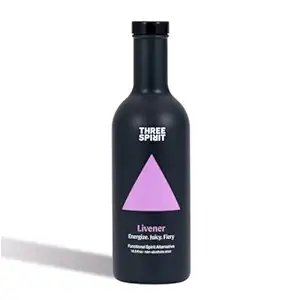
Three Spirit The Livener
Energizing botanical spirit with natural caffeine, watermelon, and ginger. Designed for the first drink of the night.
Three Spirit makes three products built around different moods. The Livener is the one most people mean when they say they want a buzz. It uses guayusa (a caffeinated leaf from Ecuador) alongside schisandra berries and green tea for a gently energizing effect. The flavor leans tropical with watermelon and ginger. Mix it with tonic or ginger beer, or shake it over ice with lime. The Nightcap is their wind-down option, built around valerian and lemon balm, and works well as an after-dinner drink.
Aplos
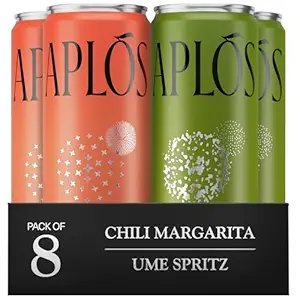
Aplos Variety Pack
Adaptogen and botanical cocktails. No added sugar, low calorie. Comes ready to drink in cans.
Aplos started with a hemp-infused spirit and has expanded into ready-to-drink cans. Their Arise line uses broad-spectrum hemp extract with adaptogens for a calming social effect. The canned cocktails (Ume Spritz and Chili Margarita) are a good entry point because they’re already mixed and balanced. The effect is mild, somewhere between a cup of chamomile tea and a light beer. Most people describe it as taking the edge off without any impairment.
Kin Euphorics
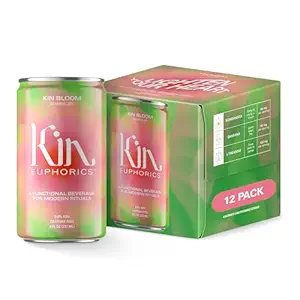
Kin Euphorics Bloom
Functional non-alcoholic rosé with L-theanine, schisandra, and damiana. Prebiotic and ready to drink.
Kin was one of the first brands in the functional spirits space. Their Bloom is a sparkling rosé made with L-theanine, rhodiola, and damiana, which has a long history as a mild mood enhancer in Mexican and Central American herbal traditions. It’s designed for daytime or early evening drinking and tastes more like a sophisticated soda than a spirit. The effect is gentle. Kin also makes Lightwave, which is formulated for nighttime with reishi and melatonin.
Setting honest expectations
Here’s the truth: none of these will make you feel drunk. If that’s what you’re looking for, you won’t find it in a bottle of adaptogens. What they can do is create a subtle shift, a slight softening, a gentle lift, or a sense of calm that makes the ritual of drinking feel like it’s doing something beyond hydrating you.
The people who tend to be happiest with functional spirits are those who are sober curious and miss the ritual and the feeling of transition that a drink provides. That moment after work when you pour something, sit down, and mentally shift gears. These products are good at marking that transition.
Your mileage will vary. Some people feel a noticeable effect from adaptogens after the first serving. Others notice nothing until they’ve been drinking them regularly for a week or two. Kava and THC-infused drinks tend to produce the most immediate and obvious results, while adaptogen-based options are slower and more subtle.
What to try first
If you want the most noticeable effect right away, look for kava-based drinks or low-dose THC seltzers (if legal in your state). If you want something you can mix into cocktails like a traditional spirit substitute, Three Spirit is the most versatile. If you want something ready to drink with no mixing required, Aplos cans or Kin Euphorics are the easiest starting point.
Whatever you try, give it a fair shot. Have two or three servings across different evenings before deciding whether it works for you. And keep in mind that the goal isn’t to replicate alcohol. It’s to find something that fills the same space in your routine while letting you stay fully present for the rest of your evening.